Nullam dignissim, ante scelerisque the is euismod fermentum odio sem semper the is erat, a feugiat leo urna eget eros. Duis Aenean a imperdiet risus.
Nullam dignissim, ante scelerisque the is euismod fermentum odio sem semper the is erat, a feugiat leo urna eget eros. Duis Aenean a imperdiet risus.

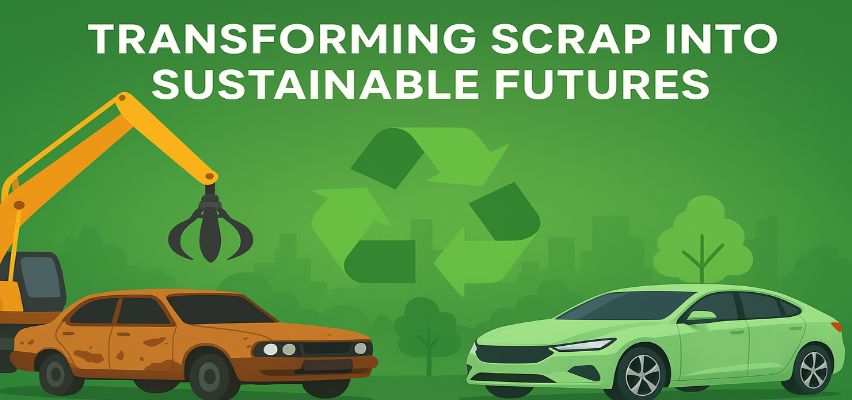
A sustainable future depends on how effectively we manage resources. At the heart of this transition lies the circular economy, a model designed to minimize waste and maximize value from materials already in use. Among its many applications, vehicle scrapping stands out as one of the most impactful and scalable solutions.
Unlike the conventional linear economy take, make, dispose the circular economy works to keep materials in circulation for as long as possible. It is built on four key principles:
This model not only conserves natural resources but also reduces environmental damage and creates economic opportunities.
With millions of vehicles reaching the end of their life cycle, scrapping offers a direct and large-scale application of circular economy principles. Old vehicles, if left unchecked, contribute to rising emissions, safety hazards, and waste. Responsible scrapping addresses these concerns while unlocking valuable resources.
India’s Vehicle Scrappage Policy (2021) underlines the importance of scrapping as a national priority. It mandates the phasing out of vehicles older than 15–20 years, with certified scrapping centers playing a pivotal role. Facilities like Moto Scrapland ensure transparency, safety, and compliance by offering legally valid Certificates of Destruction (CoD), enabling deregistration and access to potential incentives on new purchases.